Super Slow Strength Training offers a unique approach to fitness, often detailed in comprehensive super slow strength training PDF guides.
These resources explain how this method prioritizes controlled movements and minimal sets, differing significantly from conventional workout routines.
It’s gaining traction as a time-efficient and effective way to build strength and maintain muscle mass, particularly for older adults.
What is Super Slow Strength Training?
Super Slow Strength Training (SST) is a high-intensity approach focusing on extremely controlled movements, typically lasting 20-30 seconds per repetition. Many super slow strength training PDF guides emphasize this deliberate pace.
Unlike traditional lifting, SST prioritizes “time under tension,” maximizing muscle fiber recruitment with lighter weights. This method minimizes momentum, forcing muscles to work throughout the entire range of motion.
It’s characterized by very minimal rest between sets and a focus on both the concentric (lifting) and eccentric (lowering) phases of each exercise, as detailed in available resources.
The History and Origins of the Method
The roots of Super Slow Strength Training trace back to the work of Dr. Ken Hutchins in the 1970s, further developed by figures like Ellington Darden. Many super slow strength training PDF documents detail this evolution.
Hutchins challenged conventional wisdom, advocating for slower, more controlled movements to enhance muscle activation. This contrasted sharply with the high-volume, fast-paced training prevalent at the time.
The method gained traction through Hutchins’ publications and the subsequent work of trainers who refined and popularized the technique, emphasizing its safety and effectiveness.
Super Slow Training vs. Traditional Strength Training
Super Slow Training diverges significantly from traditional methods, as explained in many super slow strength training PDF guides. Traditional training often utilizes higher weights and faster repetitions, focusing on overall volume.
Conversely, Super Slow emphasizes extremely controlled movements, typically lasting 10-20 seconds per repetition, with lighter weights – around 25-28% of 1RM.
This difference impacts metabolic stress and muscle fiber recruitment, leading to distinct physiological adaptations and a reduced risk of injury.

The Core Principles of Super Slow Training
Super Slow Strength Training, detailed in super slow strength training PDF resources, centers on deliberate, controlled movements, maximizing time under tension for optimal results.
Key principles include slow eccentric contractions and minimal rest.
Controlled Movements and Time Under Tension
Super Slow Strength Training PDF guides emphasize that the cornerstone of this method is executing each exercise repetition with extreme control.
Typically, a single repetition might take 20-30 seconds to complete, drastically increasing time under tension compared to traditional lifting.
This prolonged tension stimulates muscle fibers more effectively, even with lighter weights.
The focus isn’t on speed, but on consciously contracting and controlling the muscle throughout the entire range of motion, maximizing metabolic stress and promoting muscle adaptation.
Focus on Eccentric Contraction
Super Slow Strength Training PDF materials consistently highlight the importance of the eccentric, or negative, phase of each repetition.
This involves slowly resisting the weight as it returns to its starting position, often taking 3-5 seconds.
Eccentric contractions cause greater muscle damage – in a controlled way – leading to enhanced muscle growth and strength gains.
By prioritizing this phase, the method maximizes muscle fiber recruitment and metabolic stress, even with relatively low loads, making it effective for all fitness levels.
Minimal Rest Periods
Super Slow Strength Training PDF guides emphasize drastically reduced rest intervals between repetitions and sets – typically 2-4 seconds.
This deliberate strategy keeps muscles under constant tension, amplifying metabolic stress and promoting greater muscle fiber recruitment.
Unlike traditional training with longer rests, minimal recovery periods elevate heart rate and contribute to a more significant cardiovascular challenge.
This approach enhances the workout’s efficiency, allowing individuals to achieve substantial results in shorter sessions, often just 30 minutes, twice weekly.
Benefits of Super Slow Strength Training
Super Slow Strength Training PDF resources highlight reduced injury risk, muscle maintenance, joint protection, and time efficiency as key advantages.
These benefits make it ideal for all fitness levels.
Reduced Risk of Injury
Super Slow Strength Training PDF guides consistently emphasize a significantly lower risk of injury compared to traditional methods. This stems from the controlled, deliberate movements and lighter resistance used.
By slowing down the exercise tempo, individuals maintain greater control throughout the entire range of motion, minimizing the chance of strains or tears.
The focus isn’t on lifting heavy weights quickly, but on maximizing muscle engagement with precise form, making it safer, especially for beginners or those recovering from injuries.
Muscle Mass Maintenance for Older Adults
Super Slow Strength Training PDF resources highlight its exceptional benefits for older adults seeking to preserve muscle mass. As we age, muscle loss (sarcopenia) is a natural process, but this method combats it effectively.
The technique allows individuals to make lighter weights feel heavier, providing sufficient stimulus for muscle protein synthesis without excessive strain on joints.
This is crucial for maintaining functional strength, independence, and overall quality of life in later years, as detailed in many training manuals.
Joint Protection and Improved Stability
Super Slow Strength Training PDF guides emphasize the method’s low-impact nature, making it ideal for individuals with joint pain or limitations. The controlled movements minimize stress on vulnerable areas, promoting joint health.
By strengthening the muscles surrounding joints, this training significantly enhances stability and reduces the risk of falls, a major concern for older adults.
The focus on proper form, detailed in these resources, further contributes to safe and effective joint protection during exercise.
Time Efficiency: 30 Minutes, Twice a Week
Super Slow Strength Training PDF materials consistently highlight its remarkable time efficiency. Unlike traditional workouts demanding hours at the gym, this method delivers substantial results in just 30 minutes per session.
The recommended frequency is only twice a week, fitting seamlessly into busy lifestyles. This efficiency stems from maximizing muscle engagement during each slow, controlled repetition.
These guides demonstrate how focused intensity surpasses volume, making it a practical solution for lasting fitness.
Understanding Intensity in Super Slow Training
Super Slow Strength Training PDF guides emphasize utilizing 25-28% of your 1RM for optimal results, focusing on metabolic impact rather than heavy lifting.
The Role of 1RM (One Repetition Maximum)
Super Slow Strength Training PDF resources consistently highlight the importance of understanding your 1RM – the maximum weight you can lift for a single repetition.
However, unlike traditional strength training, the goal isn’t to lift close to your 1RM.
Instead, intensity is calculated as a percentage of your 1RM, typically between 25-28%.
This lower percentage, combined with extremely slow, controlled movements, creates significant time under tension.
PDF guides explain this approach maximizes muscle fiber recruitment without the high impact and risk associated with heavier weights.
Intensity Levels: 25-28% of 1RM
Super Slow Strength Training PDF guides emphasize that utilizing 25-28% of your 1RM is central to the method’s effectiveness. This seemingly low intensity is deliberate, focusing on maximizing time under tension.
Unlike traditional lifting, where higher weights are used, super slow training prioritizes control and deliberate muscle engagement.
PDFs detail how this approach creates a substantial metabolic demand, despite the lighter load, leading to muscle fatigue and growth.
It’s a key differentiator, reducing injury risk.
Metabolic Impact and Comparison to Traditional Training
Super Slow Strength Training PDF resources highlight a contrasting metabolic impact compared to traditional methods. While traditional training (65-75% of 1RM) yields higher immediate metabolic boosts, super slow training’s prolonged tension creates a different effect.
PDFs explain that the extended time under tension, despite lower weight, can still significantly challenge muscles.
However, some guides acknowledge that super slow’s impact on boosting metabolism isn’t as substantial as higher-intensity approaches, focusing instead on muscle maintenance.
Designing a Super Slow Strength Training Workout
Super Slow Strength Training PDF guides emphasize selecting compound exercises, prioritizing proper warm-up and cool-down routines, and crafting a full-body routine.
These resources detail exercise selection.
Exercise Selection: Compound vs. Isolation
Super Slow Strength Training PDF resources consistently advocate for prioritizing compound exercises – movements engaging multiple muscle groups simultaneously, like squats, deadlifts, and rows.
These maximize time under tension and metabolic demand within the brief workout window.
While isolation exercises (bicep curls, leg extensions) have a place, they are generally considered secondary.
The focus remains on foundational movements that deliver the greatest systemic benefit, aligning with the method’s efficiency and overall strength-building goals.
PDF guides often provide specific exercise lists.
Warm-up and Cool-down Protocols
Super Slow Strength Training PDF guides emphasize that a thorough warm-up is crucial, despite the low-impact nature of the training.
This typically involves 5-10 minutes of light cardio, like walking, followed by dynamic stretching focusing on the muscles to be worked.
Cool-downs are equally important, consisting of static stretches held for 30-60 seconds each.
These protocols enhance flexibility, reduce muscle soreness, and prepare the body for the intense, controlled movements characteristic of this training style.
Proper preparation is key.
Sample Workout Routine (Full Body)
Many Super Slow Strength Training PDF resources detail a full-body routine achievable in approximately 30 minutes, twice weekly.
Exercises often include leg press, chest press, lat pulldown, shoulder press, and bicep curls, performed with 25-28% of your 1RM.
Each repetition takes 10-20 seconds, focusing on both the concentric and eccentric phases.
Typically, one set of 8-12 repetitions per exercise is recommended, with minimal rest between exercises.
Consistency is vital for optimal results.
The Perfect Workout Methodology
The Perfect Workout, detailed in various super slow strength training PDF guides, champions slow-motion training developed by Matt Hedman.
This approach emphasizes maximizing metabolic impact through precise, controlled movements and minimal rest periods.
Matt Hedman’s Approach to Slow Motion Training
Matt Hedman, founder of The Perfect Workout, revolutionized strength training with his slow-motion methodology, extensively documented in super slow strength training PDF resources.
His approach centers on performing each exercise with extremely controlled movements, typically lasting around 30-60 seconds per repetition.
This deliberate pace maximizes time under tension, stimulating muscle growth and metabolic response more effectively than traditional lifting.
Hedman’s system prioritizes quality over quantity, advocating for fewer sets and repetitions, but with significantly increased intensity and focus on proper form.
His work emphasizes evidence-based effectiveness, demonstrating remarkable results with minimal time commitment;
Evidence-Based Effectiveness
Super Slow Strength Training’s efficacy is increasingly supported by research, often summarized within detailed super slow strength training PDF guides.
Studies demonstrate its potential for muscle mass maintenance, particularly beneficial for older adults, and reduced injury risk due to controlled movements.
While some sources note the lower metabolic impact compared to traditional high-intensity training, the focus on eccentric contraction yields unique benefits.
Matt Hedman’s methodology, detailed in available resources, showcases positive outcomes with minimal workout frequency – just twice weekly for 30 minutes.
These findings highlight its viability as a safe and effective strength-building method.
Finding Super Slow Training Resources
Super slow strength training PDF guides are readily available online, offering detailed protocols.
Locate qualified trainers and explore online communities for support and further learning about this method.
Locating Qualified Trainers
Finding a certified Super Slow trainer is crucial for maximizing benefits and minimizing risk. While super slow strength training PDF guides offer valuable information, personalized instruction is invaluable.
Look for trainers specifically certified in this methodology, as proper form and intensity control are paramount.
Websites and fitness directories can help locate professionals in your area. Don’t hesitate to inquire about their experience and qualifications before committing to sessions.
Private studios specializing in this technique are also excellent resources.
Super Slow Strength Training PDF Guides
Super slow strength training PDF guides are readily available online, offering a detailed introduction to the method’s principles and techniques.
These resources often cover exercise selection, proper form, and recommended intensity levels, typically around 25-28% of your 1RM.
They can supplement, but shouldn’t replace, guidance from a qualified trainer.
Look for guides that emphasize controlled movements, eccentric contraction, and minimal rest periods for optimal results and safety.
Online Resources and Communities
Numerous online platforms support the super slow strength training community, offering valuable insights and support.
Websites like Rising Legends Academy of Fitness and The Perfect Workout provide articles and information, sometimes available as downloadable super slow strength training PDF resources.
Forums and social media groups allow enthusiasts to share experiences, ask questions, and connect with qualified trainers.
These digital spaces foster learning and motivation, helping individuals maximize the benefits of this unique training approach.
Equipment Needed for Super Slow Training
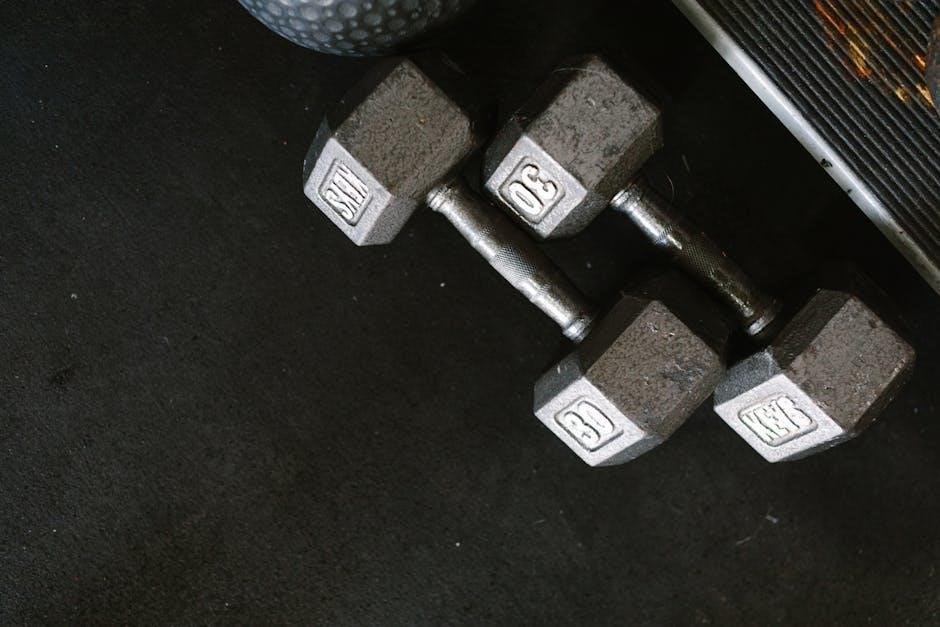
Super slow strength training can utilize both weight machines and free weights, as detailed in many super slow strength training PDF guides.
Adjustable resistance is key, prioritizing proper form over heavy lifting.
Weight Machines vs. Free Weights
Super slow strength training PDF resources often discuss the debate between weight machines and free weights. Machines offer guided movements, enhancing safety and isolating muscle groups – ideal for beginners focusing on form.
However, free weights demand greater stabilization, engaging more muscles and mimicking real-life movements.
The choice depends on individual experience and goals; both can be effective when paired with the slow, controlled tempo central to this training style. Prioritize proper technique regardless of equipment.
Adjustable Resistance Options
Super slow strength training PDF guides emphasize the importance of precise resistance control. Adjustable dumbbells, resistance bands, and cable machines are excellent choices, allowing for fine-tuning to maintain the 25-28% of 1RM intensity.
This level ensures maximal muscle fiber recruitment without compromising form during the extended time under tension.
Progressive overload is key; gradually increase resistance as strength improves, always prioritizing controlled, deliberate movements over lifting heavier weights.
Importance of Proper Form
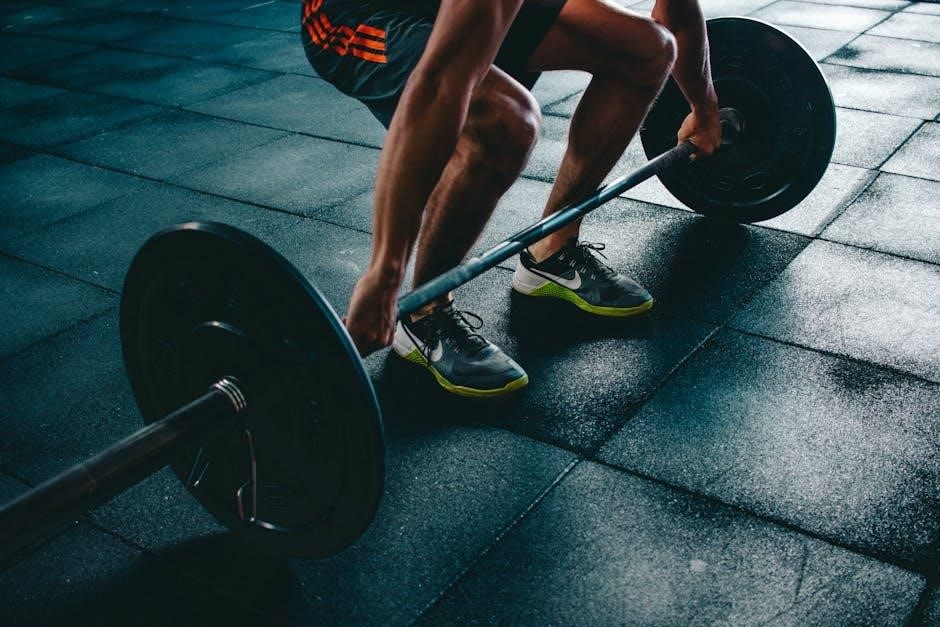
Super slow strength training PDF resources consistently highlight that impeccable form is paramount. The slow, controlled movements amplify any existing imbalances or technique flaws, increasing injury risk.
Focus on maintaining a neutral spine, engaging core muscles, and executing each repetition with deliberate precision.
Prioritize quality over quantity; even slight deviations from proper form negate the benefits and compromise safety. Consider working with a qualified trainer initially to master technique.
Addressing Common Concerns
Super slow strength training PDF guides often debunk myths about muscle building and cardiovascular impact, clarifying its suitability for varied fitness levels.
They address concerns about effectiveness and accessibility.
Is Super Slow Training Effective for Building Muscle?
Super slow strength training PDF resources address this common question directly, explaining that while the intensity (25-28% of 1RM) is lower than traditional methods, it’s not necessarily ineffective.
The extended time under tension, achieved through incredibly slow repetitions, creates a unique metabolic stress.
This stress can stimulate muscle protein synthesis, particularly beneficial for maintaining muscle mass in older adults, as highlighted in various guides.
However, some PDFs acknowledge that maximizing hypertrophy might require supplemental training or periodization.
Can Super Slow Training Improve Cardiovascular Health?
Super slow strength training PDF guides often discuss the surprising cardiovascular benefits beyond traditional strength training. While not a replacement for dedicated cardio, the prolonged muscle contractions and systemic stress elevate heart rate.
This creates a metabolic demand that challenges the cardiovascular system, improving circulation and potentially lowering blood pressure.
However, these PDFs emphasize that the effect is moderate; significant cardiovascular gains require combining super slow training with other forms of exercise.
Suitability for Different Fitness Levels
Super slow strength training PDF resources highlight its adaptability for various fitness levels. Beginners benefit from the reduced injury risk due to controlled movements and lighter weights, building a foundation safely.
Intermediate and advanced lifters can increase intensity by adjusting resistance, maximizing time under tension.
These guides often emphasize that it’s particularly suitable for older adults or those recovering from injuries, offering a low-impact yet effective workout option.

Super Slow Training and Metabolism
Super slow strength training PDF guides discuss metabolic impact, noting that its lower intensity (25-28% 1RM) may not significantly boost metabolism.
Comparisons to traditional training and HIIT are often included.
The Impact on Resting Metabolic Rate
Super slow strength training PDF resources often address the question of metabolic rate impact. While strength training generally increases resting metabolic rate, the intensity of super slow training is a key factor.
Information suggests that the relatively low intensity – typically 25-28% of one repetition maximum – may not elevate metabolism as substantially as traditional, higher-intensity strength training.
This contrasts with methods like HIIT, known for a more pronounced metabolic effect. However, consistent super slow training can still contribute to overall metabolic health and muscle maintenance.
Comparison to High-Intensity Interval Training (HIIT)
Super slow strength training PDF guides frequently draw comparisons to High-Intensity Interval Training (HIIT). While HIIT focuses on short bursts of intense activity, super slow prioritizes controlled, low-intensity movements.
HIIT is renowned for its significant impact on cardiovascular health and rapid metabolic boost, but it can also carry a higher risk of injury.
Super slow offers a gentler approach, emphasizing joint protection and reduced strain, making it suitable for individuals seeking a less demanding, yet effective, workout.
The Future of Super Slow Strength Training
Super slow strength training PDF resources suggest ongoing research will refine protocols and expand applications, particularly in rehabilitation settings;
Expect advancements in personalized training and accessibility.
Emerging Research and Developments
Super slow strength training PDF guides are increasingly accompanied by studies exploring its nuanced effects on metabolic rate and muscle protein synthesis.
Current research focuses on optimizing intensity levels beyond the traditional 25-28% of 1RM, investigating potential benefits of individualized resistance.
Furthermore, scientists are examining the neurological adaptations triggered by the slow, controlled movements, and how these impact motor control and stability.
Expect future developments to incorporate biofeedback and advanced monitoring technologies to enhance training precision and effectiveness.
Potential Applications in Rehabilitation
Super slow strength training PDF resources highlight its growing role in rehabilitative settings due to its low-impact nature and emphasis on controlled movements.
This method proves beneficial for individuals recovering from injuries, surgeries, or experiencing chronic pain, minimizing stress on joints.
Its ability to rebuild strength with reduced risk makes it ideal for older adults and those with limited mobility.
Further research explores its efficacy in neurological rehabilitation, potentially improving motor function and balance in patients with conditions like stroke.

Safety Considerations
Super slow strength training PDF guides emphasize proper form and listening to your body to prevent injury.
Contraindications and precautions are detailed, ensuring safe practice for all fitness levels.
Proper Form and Technique
Super slow strength training PDF resources consistently highlight the paramount importance of impeccable form. Because of the extended time under tension, even slight deviations can lead to strain.
These guides often include detailed illustrations and descriptions of correct posture for each exercise, emphasizing controlled, deliberate movements.
Maintaining a neutral spine, engaging core muscles, and avoiding momentum are crucial. Prioritizing technique over weight ensures maximum effectiveness and minimizes the risk of injury, a core tenet of the method.
Listening to Your Body
Super slow strength training PDF guides emphasize intuitive training; paying close attention to your body’s signals is vital. Unlike high-impact workouts, this method demands awareness of muscle fatigue and joint discomfort.
Pain is a clear indicator to stop, adjust form, or reduce resistance. These resources advocate for respecting individual limits and avoiding pushing through pain.
Progressive overload should be gradual, and recovery is key. Prioritizing mindful movement and self-assessment ensures a safe and effective training experience.
Contraindications and Precautions
Super slow strength training PDF materials often detail specific contraindications. Individuals with pre-existing cardiovascular conditions should consult a physician before starting.
Those with acute injuries, severe joint pain, or recent surgeries require medical clearance. Proper form is paramount; incorrect technique can exacerbate existing issues.
Beginners should start with minimal resistance and prioritize mastering movement patterns. Always warm up adequately and cool down post-workout to minimize risk and maximize benefits.