Judith Weston’s influential work offers directors a pathway to unlock compelling performances, emphasizing empathetic communication and insightful actor guidance.
Her techniques, often found within the widely sought “Directing Actors” PDF, provide a practical, holistic approach to collaboration and artistic vision.
Weston’s methods are celebrated for their ability to foster trust and empower actors to deliver authentic, nuanced portrayals on stage and screen.
The Significance of the “Directing Actors” PDF
Judith Weston’s “Directing Actors” has become a cornerstone resource for filmmakers, theatre directors, and acting coaches alike, and the readily available PDF version amplifies its reach. This digital format democratizes access to Weston’s groundbreaking techniques, allowing aspiring and established directors to study her methods at their own pace and convenience.
The PDF isn’t merely a transcription of the book; it represents a concentrated distillation of decades of experience working with renowned actors. It provides a detailed framework for understanding the actor’s process, moving beyond superficial direction towards a deeper, more collaborative relationship. Its significance lies in its practical application – offering directors tools to navigate the complexities of rehearsals and performance.
Furthermore, the “Directing Actors” PDF facilitates easy searching and referencing, making it an invaluable companion during pre-production, rehearsals, and even on set. It’s a portable masterclass, empowering directors to confidently guide actors towards truthful and compelling performances, fostering a creative environment built on mutual respect and understanding.
Judith Weston’s Approach: A Holistic View
Judith Weston’s directing philosophy, detailed in resources like the “Directing Actors” PDF, transcends traditional technical instruction, embracing a profoundly humanistic and holistic perspective. She views the actor not as a vessel to be filled with direction, but as a complex individual with a unique instrument – their entire being – requiring sensitive and nuanced guidance.
Weston emphasizes understanding the actor’s internal world, their emotional life, and their personal connection to the character. Her approach prioritizes creating a safe and supportive environment where actors feel empowered to take risks and explore vulnerability. This isn’t about imposing a vision, but facilitating the actor’s discovery of the truth within the script.
This holistic view extends to the director’s own self-awareness; Weston encourages directors to examine their own biases and communication patterns to foster genuine collaboration. Ultimately, her method aims to unlock the actor’s full potential, resulting in performances that are authentic, compelling, and deeply resonant.
Core Concepts from “Directing Actors”
Judith Weston’s core teachings, accessible in the “Directing Actors” PDF, center on empathetic observation, script analysis, and understanding the actor’s unique creative process.
Understanding the Actor’s Instrument

Judith Weston’s approach, detailed in the “Directing Actors” PDF, fundamentally reframes how directors perceive actors; She posits that an actor isn’t simply a vessel to be filled with direction, but a complex instrument with its own inherent capabilities and limitations.
This “instrument” isn’t merely about vocal range or physical prowess; it encompasses the actor’s emotional life, imagination, intellectual understanding, and personal history. Weston stresses the importance of recognizing that each actor’s instrument is uniquely calibrated.
Effective directing, therefore, isn’t about imposing a vision onto the actor, but about skillfully tuning their instrument to achieve the desired result. This requires directors to become astute observers, capable of identifying an actor’s strengths, vulnerabilities, and preferred methods of working.
Weston encourages directors to move beyond superficial adjustments and delve into the underlying mechanisms that drive an actor’s performance, fostering a deeper, more collaborative relationship.
The Importance of Observation and Analysis
Judith Weston’s “Directing Actors” PDF places paramount importance on meticulous observation and insightful analysis as foundational directing skills. She argues that directors must become keen students of human behavior, not just of the script.
Before offering any direction, Weston advocates for deeply observing the actor’s initial choices – their physicality, vocal delivery, and emotional responses. This isn’t passive watching; it’s active analysis, seeking to understand the actor’s intentions and the underlying motivations driving their performance.
Weston emphasizes identifying patterns, inconsistencies, and areas where the actor’s choices align or diverge from the director’s vision. This analytical process informs the director’s subsequent feedback, ensuring it’s specific, targeted, and genuinely helpful.
Furthermore, she stresses analyzing the actor’s process – how they approach the work, their comfort levels, and their responsiveness to different types of direction. This understanding is crucial for tailoring communication and building a productive working relationship.
Breaking Down the Script for Actors
Judith Weston’s “Directing Actors” PDF details a specific methodology for script breakdown, tailored to empower actors rather than dictate interpretation. She cautions against simply telling actors what to do, instead advocating for guiding them to discover the character’s motivations themselves.
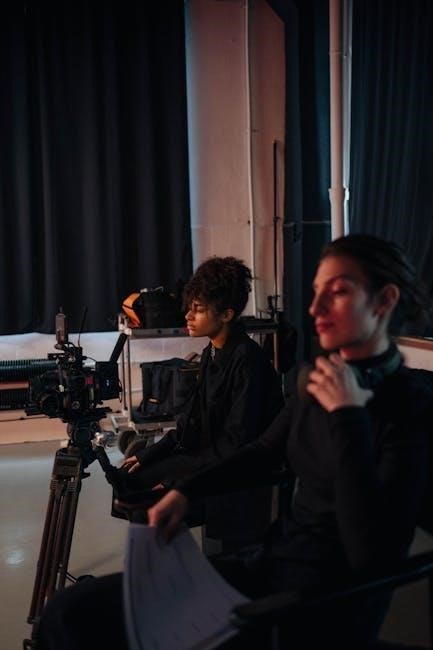
Weston proposes a layered approach, beginning with identifying the character’s “essential action” – the core desire driving their behavior in each scene; This isn’t about plot points, but about the character’s internal needs and objectives.
She then encourages directors to help actors map the character’s relationships, identifying the power dynamics and emotional connections that shape their interactions. This involves exploring the character’s history and backstory, even elements not explicitly stated in the script.
Crucially, Weston stresses avoiding overly prescriptive interpretations. The goal is to provide actors with a solid foundation of understanding, allowing them the freedom to make creative choices and bring their own unique insights to the role.

Practical Techniques for Directors
Judith Weston’s PDF emphasizes empathetic listening, detailed observation, and asking insightful questions to unlock an actor’s potential and build collaborative trust.
Her techniques prioritize understanding the actor’s process and fostering a safe environment for creative exploration.
Giving Effective Direction: Avoiding Common Pitfalls
Judith Weston’s approach, detailed in resources like the “Directing Actors” PDF, strongly cautions against simply telling actors what to do. Instead, she advocates for directors to pose questions that guide actors toward discovering the character’s motivations and emotional life organically.
A common pitfall is offering generic direction – “be sadder,” “more angry” – which lacks specificity and can feel arbitrary to the actor. Weston stresses the importance of avoiding vague commands and instead focusing on the character’s circumstances and relationships.
Directors should also steer clear of imposing their own interpretation of the character onto the actor. The goal isn’t to replicate the director’s vision, but to facilitate the actor’s unique understanding and embodiment of the role.
Furthermore, Weston warns against over-directing, which can stifle an actor’s creativity and spontaneity. Allowing space for experimentation and trusting the actor’s instincts are crucial for achieving authentic performances. Effective direction, according to Weston, is about collaboration, not control.
Working with Actors’ Personalities and Processes
Judith Weston’s teachings, accessible through materials like the “Directing Actors” PDF, emphasize that each actor brings a unique personality and working process to a role. A director’s success hinges on recognizing and adapting to these individual differences.

Some actors thrive on detailed analysis and intellectual exploration, while others respond better to sensory work and emotional connection. Weston advises directors to observe how an actor prepares and adjusts their approach accordingly.

Understanding an actor’s insecurities and strengths is also vital. A director should provide support and encouragement, tailoring feedback to address specific needs. Avoid a one-size-fits-all approach; what motivates one actor may hinder another.
Weston highlights the importance of respecting an actor’s boundaries and allowing them the space to explore the character in their own way. Building a trusting relationship based on mutual respect is paramount for fostering a productive and creatively fulfilling collaboration.
Utilizing Improvisation in Rehearsal
Judith Weston’s approach, detailed in resources like the “Directing Actors” PDF, champions the use of improvisation as a powerful tool in rehearsal. Improvisation isn’t merely about comedic games; it’s a method for unlocking spontaneity and deepening an actor’s connection to the character.
Weston suggests using improvisation to explore the character’s backstory, relationships, and emotional life beyond the written script. This allows actors to discover nuances and motivations that might not be explicitly stated.

Improvisation can also help actors become more comfortable with risk-taking and responding authentically in the moment. It breaks down inhibitions and encourages them to trust their instincts.
However, Weston cautions against unstructured improvisation. Exercises should always have a clear objective, related to the scene or character. The director’s role is to guide the improvisation, providing prompts and boundaries while allowing the actors freedom to explore.

Specific Exercises from the Book
Judith Weston’s Directing Actors, often accessed via PDF, is rich with practical exercises. These techniques empower directors to unlock authentic performances from their casts.
They focus on sensory work and emotional depth.
The “As If” Technique Explained
Judith Weston’s “As If” technique, detailed within her Directing Actors – frequently consulted as a PDF resource – is a cornerstone of her approach. It’s not about becoming the character, but rather exploring the scene as if you were someone else facing similar circumstances.
This method encourages actors to bypass intellectualizing and tap into genuine emotional responses. Weston emphasizes asking actors “As if this happened to you, what would you do?” or “As if you were a different person, how would you react?”. This avoids forcing a performance and allows for organic discovery.
The power lies in the “As If” creating distance, allowing the actor to explore vulnerability without the pressure of personal identification. It’s a safe space for experimentation, fostering truthful behavior and nuanced choices. Weston cautions against overly specific “As If” scenarios, preferring open-ended prompts that encourage the actor’s imagination.
Ultimately, the technique aims to unlock the character’s motivations through the actor’s own empathetic understanding, resulting in a more compelling and believable portrayal.
Sensory Work and Emotional Recall
Judith Weston’s Directing Actors – often accessed as a PDF – delves into the potent combination of sensory work and emotional recall, but with crucial distinctions. She advocates for focusing on the physical sensations associated with an emotion, rather than directly attempting to relive a past emotional experience;
Weston cautions against the dangers of traditional “emotional recall,” fearing it can be psychologically damaging and lead to inauthentic performances. Instead, she champions sensory exploration: What does the character see, hear, smell, taste, and touch? These concrete details trigger emotional responses organically.
For example, instead of asking an actor to “remember a time you felt grief,” Weston might ask them to focus on the physical sensation of coldness or heaviness in the chest. This bypasses the intellect and taps into the body’s memory.
This approach fosters truthful behavior without the risk of emotional trauma, allowing actors to access a wide range of feelings safely and effectively.
Physicality and Character Development
Judith Weston’s Directing Actors – frequently studied via a PDF version – emphasizes that physicality isn’t merely about external appearance, but a fundamental pathway to understanding a character’s inner life. She urges directors to move beyond superficial choices like posture or gait.
Weston advocates for exploring how a character’s history, beliefs, and relationships manifest in their physical being. This involves detailed observation and experimentation. What are the character’s habitual movements? How do they use their space? What is their relationship to gravity?
She encourages directors to ask actors to improvise physical tasks as the character, revealing unconscious patterns and insights. This isn’t about “finding” a physicality, but allowing it to emerge organically from the character’s core.
By grounding the character in concrete physical choices, actors can create believable and compelling portrayals, enriching their performance with layers of subtext and authenticity.

The Role of the Director-Actor Relationship
Judith Weston’s Directing Actors PDF stresses that a director’s primary role is fostering trust and open communication with performers.
Collaboration, empathy, and mutual respect are vital for unlocking an actor’s full potential and achieving a shared artistic vision.
Building Trust and Collaboration
Judith Weston’s approach, detailed in the Directing Actors PDF, fundamentally centers on establishing a secure and collaborative environment. She advocates for directors to move beyond simply telling actors what to do, and instead, focus on deeply understanding their individual processes.
This involves active listening, thoughtful questioning, and a genuine curiosity about the actor’s interpretation of the character and the script. Weston emphasizes avoiding judgmental language or imposing a singular vision, allowing actors the freedom to explore and contribute creatively.
Building trust requires vulnerability from the director as well – sharing their own artistic intentions and being open to feedback. She suggests directors articulate why they are requesting a change, connecting it to the overall narrative and character arc, rather than issuing directives.
Ultimately, a strong director-actor relationship, as Weston outlines, is built on mutual respect, shared ownership of the work, and a commitment to supporting each other’s artistic growth.
Handling Difficult Actors and Situations
Judith Weston’s Directing Actors PDF acknowledges that challenging situations with actors are inevitable. She doesn’t advocate for confrontation, but rather for skillful navigation rooted in understanding the underlying causes of the difficulty.
Often, “difficult” behavior stems from insecurity, fear of failure, or a misunderstanding of the director’s intent. Weston suggests reframing the situation – seeing the actor’s resistance not as defiance, but as a sign of their investment in the work.
She emphasizes the importance of private, empathetic conversations, focusing on specific behaviors rather than making generalizations about the actor’s personality. Directors should clearly articulate their needs and boundaries, while simultaneously validating the actor’s feelings.
Weston also advises directors to be prepared to adjust their approach, recognizing that a one-size-fits-all method rarely works. Maintaining composure and a commitment to collaboration, even in tense moments, is crucial for resolving conflict and fostering a productive environment.

Resources and Further Learning
Explore online forums and communities dedicated to directing, alongside Judith Weston’s Directing Actors PDF, for continued growth and insight.
Numerous workshops and related books expand upon her techniques, offering deeper dives into actor collaboration and directorial craft.
Where to Find the “Directing Actors” PDF Legally
Securing a legitimate copy of Judith Weston’s Directing Actors PDF is crucial, respecting copyright and ensuring access to the complete, unaltered work. While readily available through unofficial channels, these sources often present risks – including malware, incomplete versions, or ethical concerns regarding intellectual property.
The most reliable path is purchasing the PDF directly from reputable booksellers like Amazon, Barnes & Noble, or other online retailers specializing in performing arts resources. Checking the publisher’s website (Allworth Press) is also a sound strategy, as they frequently offer digital versions for direct download.
Furthermore, many university libraries and performing arts schools subscribe to digital libraries that may include Directing Actors. Investigating access through academic institutions can be a cost-effective and legal option. Avoid websites promising “free” PDFs, as these are almost invariably illegal copies and potentially harmful to your device.
Supporting the author and publisher by obtaining a legitimate copy ensures the continued creation and distribution of valuable resources for directors and actors alike.
Online Communities and Forums for Directors
Engaging with online communities provides invaluable support and discussion for directors, particularly those exploring Judith Weston’s techniques from Directing Actors. Several platforms foster collaborative learning and problem-solving.
Stage Directors and Choreographers Society (SDC) offers forums and resources for professional directors, often including discussions on actor work and rehearsal strategies. Reddit’s r/filmmakers and r/acting are active spaces where directors share experiences and seek advice. Facebook groups dedicated to directing and acting provide another avenue for connection.
Specifically, searching for groups focused on “Method Acting,” “Scene Study,” or “Directing Techniques” can yield relevant conversations. These communities often feature discussions about Weston’s book, allowing you to exchange insights and ask questions.
Remember to approach online advice critically, but these forums offer a wealth of practical knowledge and a supportive network for directors at all levels of experience, enhancing your understanding of Directing Actors.
Related Books and Workshops
Complementing Judith Weston’s Directing Actors, several resources deepen understanding of actor collaboration and direction. Stella Adler’s “The Art of Acting” provides a foundational perspective on actor training, while Uta Hagen’s “Respect for Acting” explores internal techniques.
For a broader view of directing, consider Mel Gordon’s works on directing for the stage. Workshops offered by institutions like HB Studio in New York City and The Groundlings in Los Angeles frequently cover actor direction and scene work.
Additionally, many universities and film schools host directing workshops led by industry professionals. Online platforms like MasterClass offer courses taught by renowned directors, providing insights into their processes.
Exploring these supplementary materials alongside Weston’s guidance will create a well-rounded skillset, empowering you to effectively guide actors and realize your artistic vision, building upon the principles within the Directing Actors PDF.